See how secure private cloud hosting acts as your best defense against data leaks. We break down why dedicated cloud servers are a non-negotiable for enterprise security.
They say data is the new oil, but honestly? It’s also the number one target for cybercriminals and corporate spies. For Small to Mid-sized Businesses (SMBs) and enterprises, the stakes
are incredibly high right now. One slip-up-one single data leak-can lead to massive financial losses, legal nightmares, and a reputation that’s hard to rebuild.
That is why private cloud hosting is becoming less of a luxury and more of a strategic necessity.
Sure, public cloud options are convenient, but they often lack the strict isolation you need for your most critical apps. In this guide, we’re going to look at why a secure private cloud
environment-powered by dedicated cloud servers-is the robust shield your business needs to fend off espionage and keep your data exactly where it belongs: inside your walls.
Understanding Private Cloud Hosting: It’s More Than Just Storage
Understanding Private Cloud Hosting: It’s More Than Just Storage
The Architecture of Isolation
At the heart of this setup is the dedicated cloud server. Unlike Virtual Private Servers (VPS) that might still sit on shared hardware, a true private cloud uses resources that are logically-and often physically-isolated. This is huge for preventing things like "side-channel attacks," where hackers try to exploit shared hardware to peek at data from neighboring virtual machines.
To really get the value of a private cloud, let's compare it to the alternatives. Think of the public cloud like a massive high-rise apartment building. You have your own unit, sure, but you are sharing the foundation, the elevators, and the front door security with hundreds of other tenants. If a neighbor leaves the side gate open, your security is technically at risk, too.
Private cloud hosting, on the other hand, is like a gated, detached estate. The entire infrastructure is yours.
This single-tenant setup means your computing power, storage, and networking aren't being split with anyone else.
The Architecture of Isolation
At the heart of this setup is the dedicated cloud server. Unlike Virtual Private Servers (VPS) that might still sit on shared hardware, a true private cloud uses resources that are logically-and often physically-isolated. This is huge for preventing things like "side-channel attacks," where hackers try to exploit shared hardware to peek at data from neighboring virtual machines.
To really get the value of a private cloud, let's compare it to the alternatives. Think of the public cloud like a massive high-rise apartment building. You have your own unit, sure, but you are sharing the foundation, the elevators, and the front door security with hundreds of other tenants. If a neighbor leaves the side gate open, your security is technically at risk, too.
Private cloud hosting, on the other hand, is like a gated, detached estate. The entire infrastructure is yours.
This single-tenant setup means your computing power, storage, and networking aren't being split with anyone else.
The Security Shield: How Private Cloud Stops Leaks
Data leaks usually happen because of simple things: bad configurations, weak access controls, or vulnerabilities in shared resources. Private cloud hosting tackles this head-on with better design and custom security rules.
The Security Shield: How Private Cloud Stops Leaks
Data leaks usually happen because of simple things: bad configurations, weak access controls, or vulnerabilities in shared resources. Private cloud hosting tackles this head-on with better design and custom security rules.
1. No More 'Noisy Neighbors'
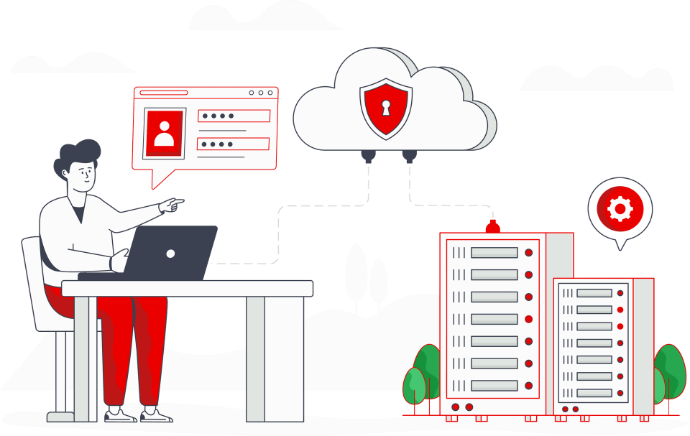
In a shared environment, if another tenant gets hit with a malware infection or a massive traffic spike, it can slow you down or, worse, open up security cracks. By moving to a dedicated cloud server, you eliminate those cross-tenant risks entirely. You have total visibility over every process running on your server, ensuring no outside drama impacts your data integrity.
1. No More 'Noisy Neighbors'
In a shared environment, if another tenant gets hit with a malware infection or a massive traffic spike, it can slow you down or, worse, open up security cracks. By moving to a dedicated cloud server, you eliminate those cross-tenant risks entirely. You have total visibility over every process running on your server, ensuring no outside drama impacts your data integrity.
2. Custom Firewalls and Strict Access
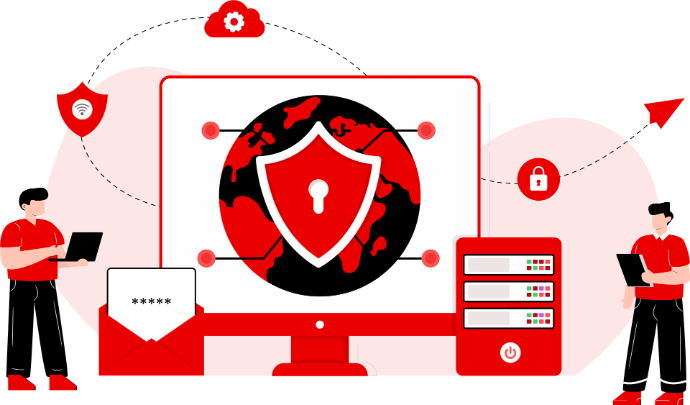
One of the best things about private cloud hosting is that you write the security rules. In a public cloud, you are often stuck with whatever standard security tier the provider offers. In a private cloud, you can:
Set up custom firewalls that only allow traffic from very specific IP addresses.
Use Zero Trust Network Access (ZTNA) policies that fit your specific workforce.
Enforce multi-factor authentication (MFA) deep at the hardware level.
This kind of granular control effectively seals the cracks where data leaks usually start.
2. Custom Firewalls and Strict Access
One of the best things about private cloud hosting is that you write the security rules. In a public cloud, you are often stuck with whatever standard security tier the provider offers. In a private cloud, you can:
Set up custom firewalls that only allow traffic from very specific IP addresses.
Use Zero Trust Network Access (ZTNA) policies that fit your specific workforce.
Enforce multi-factor authentication (MFA) deep at the hardware level.
This kind of granular control effectively seals the cracks where data leaks usually start.
Fighting Corporate Espionage with Dedicated Infrastructure
Corporate espionage isn't always like the movies; it’s often quiet and boring. Competitors or bad actors lurk in the background, monitoring data flows to steal intellectual property. Public clouds, because they are so huge, can sometimes be harder to monitor for these subtle intrusions.
Fighting Corporate Espionage with Dedicated Infrastructure
Corporate espionage isn't always like the movies; it’s often quiet and boring. Competitors or bad actors lurk in the background, monitoring data flows to steal intellectual property. Public clouds, because they are so huge, can sometimes be harder to monitor for these subtle intrusions.
Better Forensics and Monitoring
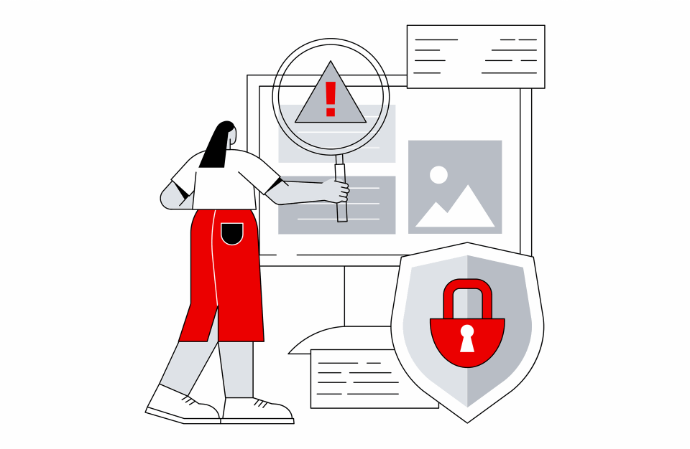
With private cloud hosting, you own the logs. That might sound boring, but it’s a massive business advantage. You can deploy advanced intrusion detection systems (IDS) that watch every single byte entering and leaving your dedicated cloud server. Because you don't have the background "noise" of hundreds of other users, spotting something weird—like a slow data leak—becomes much faster and easier.
Your Data, Your Keys, Your Rules
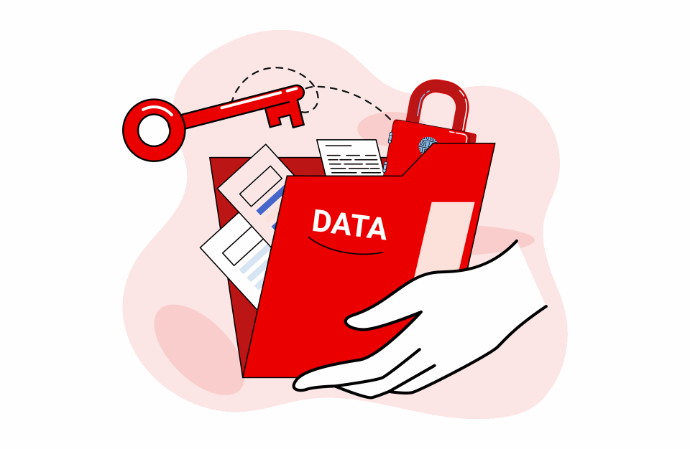
For businesses operating globally, knowing exactly where your data physically sits is often a legal requirement. Private clouds let you pin your data to specific locations (Data Sovereignty). Plus, you can manage your own encryption keys (BYOK - Bring Your Own Key). This ensures that even your cloud provider can't read your data, making it useless to anyone who might try to steal the physical drives.
Better Forensics and Monitoring
With private cloud hosting, you own the logs. That might sound boring, but it’s a massive business advantage. You can deploy advanced intrusion detection systems (IDS) that watch every single byte entering and leaving your dedicated cloud server. Because you don't have the background "noise" of hundreds of other users, spotting something weird—like a slow data leak—becomes much faster and easier.
Your Data, Your Keys, Your Rules
For businesses operating globally, knowing exactly where your data physically sits is often a legal requirement. Private clouds let you pin your data to specific locations (Data Sovereignty). Plus, you can manage your own encryption keys (BYOK - Bring Your Own Key). This ensures that even your cloud provider can't read your data, making it useless to anyone who might try to steal the physical drives.
Compliance: The Trust Factor
For industries like healthcare (HIPAA), finance (PCI-DSS), and legal services, compliance isn't just a checkbox-it’s the law. Public clouds
can be compliant, but proving it to an auditor can feel like navigating a maze.
A private cloud hosting environment simplifies this immensely. Since you control the entire stack on your dedicated cloud server, showing an
auditor exactly where data is stored, who touched it, and how it’s encrypted is straightforward. You aren't relying on a vague "shared responsibility" chart.
Compliance: The Trust Factor
For industries like healthcare (HIPAA), finance (PCI-DSS), and legal services, compliance isn't just a checkbox-it’s the law. Public clouds
can be compliant, but proving it to an auditor can feel like navigating a maze.
A private cloud hosting environment simplifies this immensely. Since you control the entire stack on your dedicated cloud server, showing an
auditor exactly where data is stored, who touched it, and how it’s encrypted is straightforward. You aren't relying on a vague "shared responsibility" chart.
Real-World Example: A Financial Services Win
Let's look at a real scenario. A mid-sized regional bank recently switched to a private cloud. Before the switch, they were on a hybrid shared setup, dealing with random slow-downs and struggling to pass the strict penetration tests required by new banking laws.
After moving to a fully managed private cloud with dedicated cloud servers, the results were immediate:
100% Data Isolation: They passed their regulatory audits on the first try.
Faster Performance: Transaction speeds jumped by 40% because they weren't fighting for resources.
Threat Mitigation: When a DDoS attack was attempted, it was isolated and blocked at their private firewall before it could even touch customer accounts.
It just goes to show that investing in private infrastructure isn't just about safety; it’s about operational stability.
Real-World Example: A Financial Services Win
Let's look at a real scenario. A mid-sized regional bank recently switched to a private cloud. Before the switch, they were on a hybrid shared setup, dealing with random slow-downs and struggling to pass the strict penetration tests required by new banking laws.
After moving to a fully managed private cloud with dedicated cloud servers, the results were immediate:
100% Data Isolation: They passed their regulatory audits on the first try.
Faster Performance: Transaction speeds jumped by 40% because they weren't fighting for resources.
Threat Mitigation: When a DDoS attack was attempted, it was isolated and blocked at their private firewall before it could even touch customer accounts.
It just goes to show that investing in private infrastructure isn't just about safety; it’s about operational stability.
Is Private Cloud Hosting Right for You?
We won't lie-private cloud hosting is an investment. It’s not for everyone. It makes the most sense for:
E-commerce giants that process thousands of transactions a second.
SaaS providers who need to promise 99.99% uptime and security to their own users.
Government contractors handling classified or sensitive info.
Healthcare providers who manage patient records and can't afford a breach.
If you just have a simple brochure website, a shared plan is probably fine. But if your business runs on data integrity and customer trust, the cost
of a private cloud is tiny compared to the cost of a breach.
Is Private Cloud Hosting Right for You?
We won't lie-private cloud hosting is an investment. It’s not for everyone. It makes the most sense for:
E-commerce giants that process thousands of transactions a second.
SaaS providers who need to promise 99.99% uptime and security to their own users.
Government contractors handling classified or sensitive info.
Healthcare providers who manage patient records and can't afford a breach.
If you just have a simple brochure website, a shared plan is probably fine. But if your business runs on data integrity and customer trust, the cost
of a private cloud is tiny compared to the cost of a breach.
Conclusion: Proactive Protection is the Only Way
In today's digital world, reactive security just doesn't cut it anymore. Private cloud hosting allows you to be proactive, building a fortress around your digital assets. By using the power of dedicated cloud servers, you can operate with confidence, knowing your proprietary data is shielded from leaks, spies, and unauthorized access.
Don't wait for a breach to show you where the holes in your infrastructure are. Secure your future now.
Ready to get serious about data security? Contact our IT infrastructure team today for a friendly audit, and let's see how a Private Cloud solution can build the ultimate shield for your business.
Conclusion: Proactive Protection is the Only Way
In today's digital world, reactive security just doesn't cut it anymore. Private cloud hosting allows you to be proactive, building a fortress around your digital assets. By using the power of dedicated cloud servers, you can operate with confidence, knowing your proprietary data is shielded from leaks, spies, and unauthorized access.
Don't wait for a breach to show you where the holes in your infrastructure are. Secure your future now.
Ready to get serious about data security? Contact our IT infrastructure team today for a friendly audit, and let's see how a Private Cloud solution can build the ultimate shield for your business.
FAQ
FAQ
Think of it like housing. Private cloud hosting is like owning a standalone home-everything inside the fence is yours and yours alone. Public cloud is more like a massive apartment complex where you share amenities and infrastructure with hundreds of other tenants.
It largely comes down to isolation. A dedicated cloud server removes the 'noisy neighbor' risk. Since your data is physically or virtually separated from everyone else's, there is a much smaller surface area for attackers to target.
Not necessarily. It depends on what you handle. If you are a small law firm or a boutique financial agency dealing with sensitive client data, the enhanced security and compliance of a private cloud are often worth the investment.
Think of it like housing. Private cloud hosting is like owning a standalone home-everything inside the fence is yours and yours alone. Public cloud is more like a massive apartment complex where you share amenities and infrastructure with hundreds of other tenants.
It largely comes down to isolation. A dedicated cloud server removes the 'noisy neighbor' risk. Since your data is physically or virtually separated from everyone else's, there is a much smaller surface area for attackers to target.
Not necessarily. It depends on what you handle. If you are a small law firm or a boutique financial agency dealing with sensitive client data, the enhanced security and compliance of a private cloud are often worth the investment.
Absolutely. Private clouds give you total control over where your data lives and who touches it. This makes it much easier to pass audits and meet strict regulations like GDPR, HIPAA, or PCI-DSS compared to shared environments.
Upfront, yes. You are paying for exclusive resources and better security. But when you factor in the performance stability and the cost of a potential data breach, the ROI on private hosting is often much higher for serious businesses.
Absolutely. Private clouds give you total control over where your data lives and who touches it. This makes it much easier to pass audits and meet strict regulations like GDPR, HIPAA, or PCI-DSS compared to shared environments.
Upfront, yes. You are paying for exclusive resources and better security. But when you factor in the performance stability and the cost of a potential data breach, the ROI on private hosting is often much higher for serious businesses.