
ITISeasy.business
Contract Management Suite
Manage Every Contract Type in
One Professional Business Solution
Contracts are more than documents. They define revenue, costs, obligations, service promises, renewals, pricing rules, assets, and long-
term customer or supplier relationships.
With the ITISeasy.business Contract Management Suite, your company can manage the complete lifecycle of every important contract type - from recurring service agreements and membership contracts to purchasing frameworks, sales frameworks, usage-based services, and leasing contracts.
Instead of tracking agreements in spreadsheets, folders, calendar reminders, and disconnected systems, ITISeasy.business brings everything into one structured, automated, and transparent contract management environment.
Book a Demo Talk to an ITIS AG Expert 

Manage Every
Contract Type in
O
ne P
rofessional B
usiness S
olution
Contracts are more than documents. They define revenue, costs, obligations, service promises, renewals, pricing rules, assets, and long-term customer or supplier relationships.
With the ITISeasy.business Contract Management Suite, your company can manage the complete lifecycle of every important contract type - from recurring service agreements and membership contracts to purchasing frameworks, sales frameworks, usage-based services, and leasing contracts.
Instead of tracking agreements in spreadsheets, folders, calendar reminders, and disconnected systems, ITISeasy.business brings everything into one structured, automated, and transparent contract management environment.
Book a Demo Talk to an ITIS AG Expert

One Suite for All Contract Types
Modern companies rarely work with only one kind of contract. A business may sell recurring services, purchase materials through supplier frameworks, manage membership billing, lease equipment, and handle usage-based support agreements at the same time.
The ITISeasy.business Contract Management Suite is built exactly for this reality.
It helps you manage:
Recurring service contracts, SaaS agreements, managed service contracts, SLA-based service agreements, membership plans, supplier framework contracts, customer framework contracts, leasing contracts, document-linked contracts, renewals, billing schedules, contract pauses, price changes, reporting, dashboards, and automated reminders.
This means your sales, finance, procurement, service, and management teams work with one consistent contract structure - while each contract type still supports its own special workflow.
Explore Contract Modules

One Suite for All
Contract Types
Modern companies rarely work with only one kind of contract. A business may sell recurring services, purchase materials through supplier frameworks, manage membership billing, lease equipment, and handle usage-based support agreements at the same time.
The ITISeasy.business Contract Management Suite is built exactly for this reality.
It helps you manage:
Recurring service contracts, SaaS agreements, managed service contracts, SLA-based service agreements, membership plans, supplier framework contracts, customer framework contracts, leasing contracts, document-linked contracts, renewals, billing schedules, contract pauses, price changes, reporting, dashboards, and automated reminders.
This means your sales, finance, procurement, service, and management teams work with one consistent contract structure - while each contract type still supports its own special workflow.
Explore Contract Modules
Why Contract Management Matters
Without a structured system, contracts become difficult to control.
Renewal dates are missed. Invoices are created manually. Price increases are forgotten. Usage is not billed correctly. Supplier volumes are not tracked. Leasing assets are hard to locate. Signed documents are stored somewhere, but not always where they are needed.
ITISeasy.business reduces this risk by turning contracts into active business records.
Every contract has a status, a billing logic, responsible users, contract lines, documents, expiry dates, renewal rules, reporting values, and automation logic.
The result is more control, less manual work, and better visibility across the full contract lifecycle.



Why Contract Management Matters
Without a structured system, contracts become difficult to control.
Renewal dates are missed. Invoices are created manually. Price increases are forgotten. Usage is not billed correctly. Supplier volumes are not tracked. Leasing assets are hard to locate. Signed documents are stored somewhere, but not always where they are needed.
ITISeasy.business reduces this risk by turning contracts into active business records.
Every contract has a status, a billing logic, responsible users, contract lines, documents, expiry dates, renewal rules, reporting values, and automation logic.
The result is more control, less manual work, and better visibility across the full contract lifecycle.
Module 1:
Fixed Term & Recurring Billing Contracts
Automate Recurring Revenue with Clear Contract Rules
This module is designed for hosting contracts, maintenance agreements, SaaS subscriptions, service retainers, and long-
term agreements with predictable billing intervals.
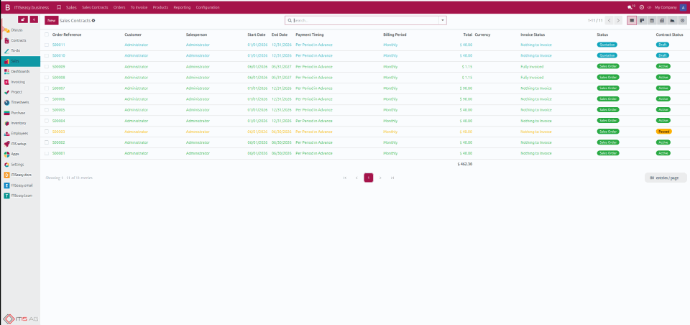
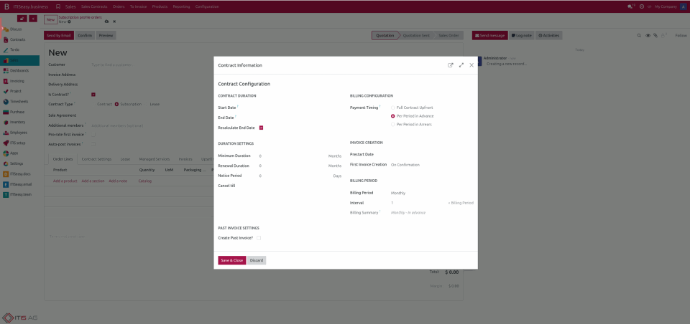
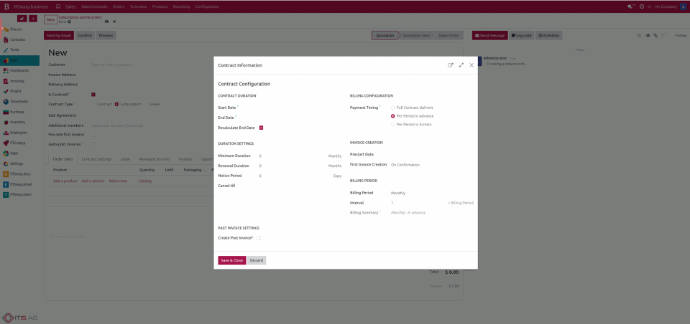
You can define contract start dates, optional end dates, minimum contract periods, billing intervals, renewal rules, fixed pricing, annual price
escalation, and contract statuses such as Draft, Active, Paused, Terminated, and Expired.
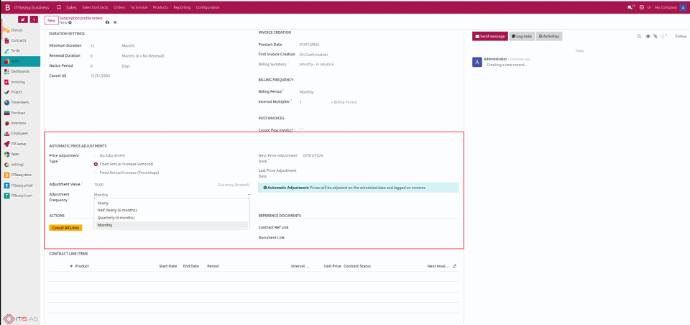
Billing can be configured weekly, bi-weekly, monthly, quarterly, annually, or based on a custom number of days.
Customers can be billed in advance or after the billing period, depending on the contract terms.
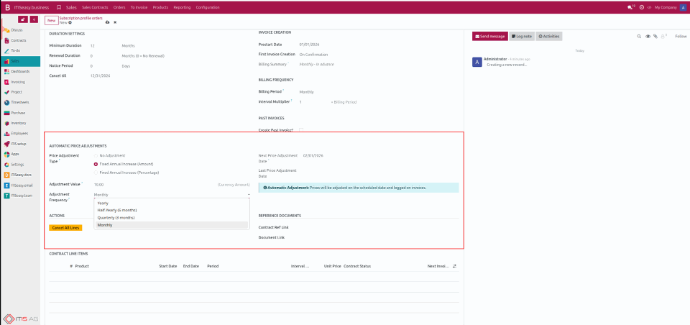
Automatic price escalation ensures that agreed annual increases are applied consistently, either by a fixed amount or percentage.
If a contract needs to be paused, billing and service delivery can be temporarily suspended using defined pause dates.
This module helps businesses protect recurring revenue, avoid missed invoices, and manage renewals with confidence.
See Recurring Billing in Action
Module 1:
Fixed Term & Recurring Billing Contracts
Automate Recurring Revenue with Clear Contract Rules
This module is designed for hosting contracts, maintenance agreements, SaaS subscriptions, service retainers, and long-term agreements with predictable billing intervals.
You can define contract start dates, optional end dates, minimum contract periods, billing intervals, renewal rules, fixed pricing, annual price
escalation, and contract statuses such as Draft, Active, Paused, Terminated, and Expired.
Billing can be configured weekly, bi-weekly, monthly, quarterly, annually, or based on a custom number of days.
Customers can be billed in advance or after the billing period, depending on the contract terms.
Automatic price escalation ensures that agreed annual increases are applied consistently, either by a fixed amount or percentage.
If a contract needs to be paused, billing and service delivery can be temporarily suspended using defined pause dates.
This module helps businesses protect recurring revenue, avoid missed invoices, and manage renewals with confidence.
See Recurring Billing in Action
Module 2:
Recurring Billing + Usage-Based Services
Track Every Hour. Invoice with Confidence.
Some contracts include a fixed base fee plus services billed according to actual usage.
This is common for managed services, support contracts, SLA agreements, maintenance plans, and monthly service packages.
This module extends recurring billing with usage tracking.
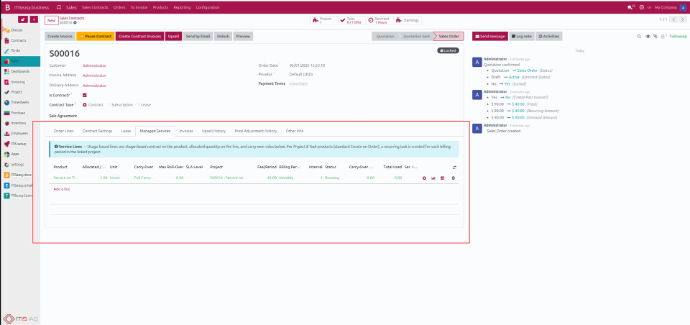
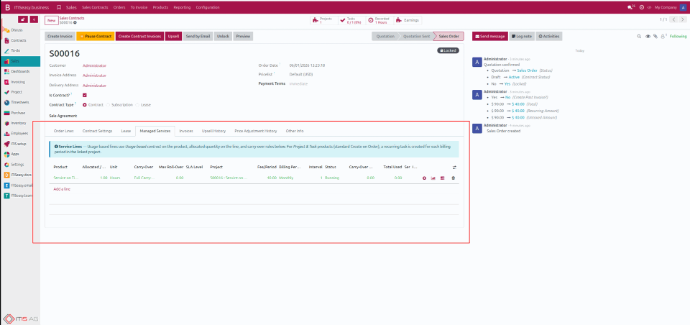
A contract can include a fixed monthly fee and a service component such as 15 support hours per month, billed or tracked based on actual delivery.
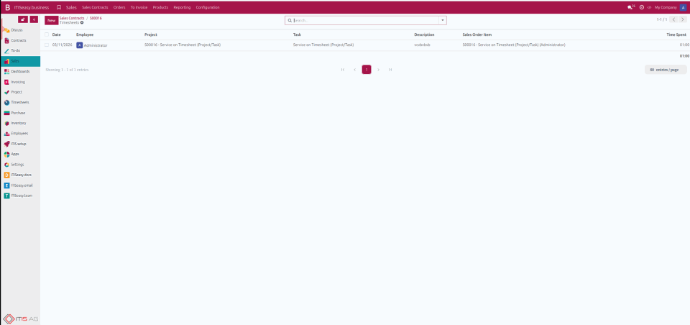
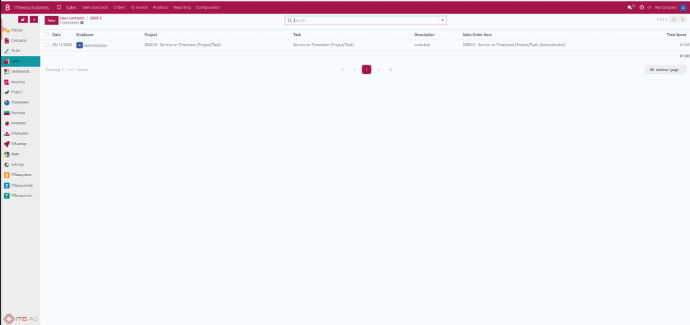
Usage can be entered manually or pulled from timesheets.
The system compares the agreed quantity with the actual delivered quantity at the end of each service period.
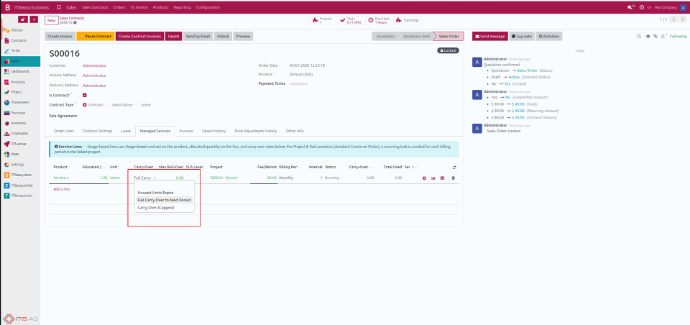
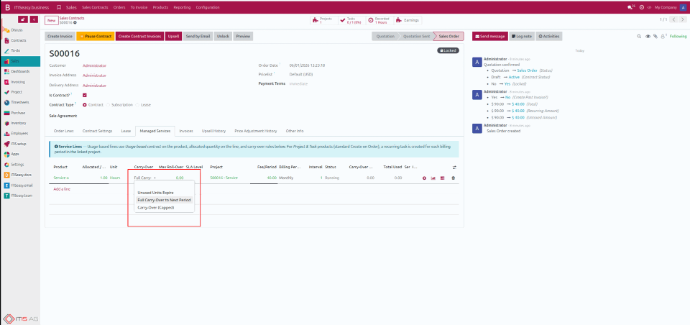
Carry-over rules allow unused service units to either expire or roll into the next period.
For example, if a customer uses only 10 out of 15 support hours, the remaining 5 hours can be carried forward if the contract allows it.
Recurring service products can also automatically create tasks at the start of each new service period, helping teams remember
what must be delivered and recorded.
SLA commitments can be managed as separate product lines, such as priority response, standard response, or next business day response.
Each SLA level can be linked to dedicated tasks for better tracking.
This module helps service teams deliver what was promised and finance teams invoice what was actually delivered.
Module 2:
Recurring Billing + Usage-Based Services
Track Every Hour. Invoice with Confidence.
Some contracts include a fixed base fee plus services billed according to actual usage.
This is common for managed services, support contracts, SLA agreements, maintenance plans, and monthly service packages.
This module extends recurring billing with usage tracking.
A contract can include a fixed monthly fee and a service component such as 15 support hours per month, billed or tracked based on actual delivery.
Usage can be entered manually or pulled from timesheets.
The system compares the agreed quantity with the actual delivered quantity at the end of each service period.
Carry-over rules allow unused service units to either expire or roll into the next period.
For example, if a customer uses only 10 out of 15 support hours, the remaining 5 hours can be carried forward if the contract allows it.
Recurring service products can also automatically create tasks at the start of each new service period, helping teams remember
what must be delivered and recorded.
SLA commitments can be managed as separate product lines, such as priority response, standard response, or next business day response.
Each SLA level can be linked to dedicated tasks for better tracking.
This module helps service teams deliver what was promised and finance teams invoice what was actually delivered.

Module 3:
Membership Contracts
Grow Your Member Base Without Growing Admin Work
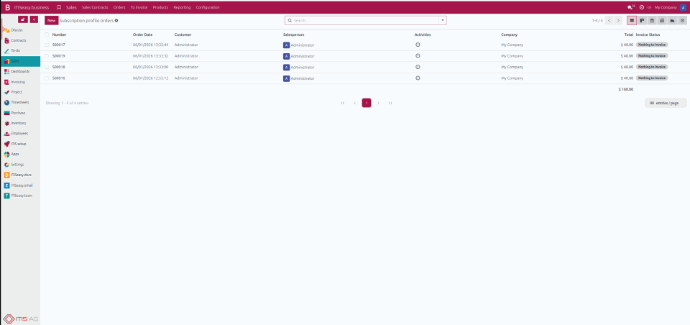
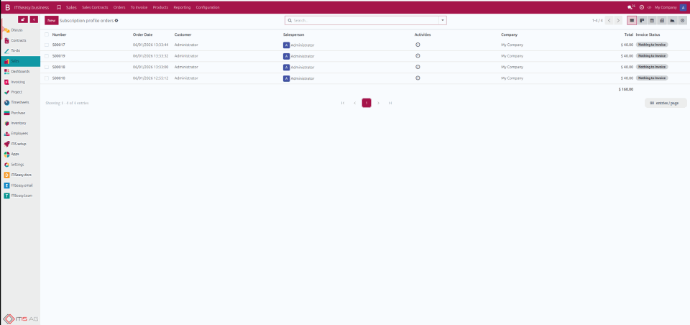
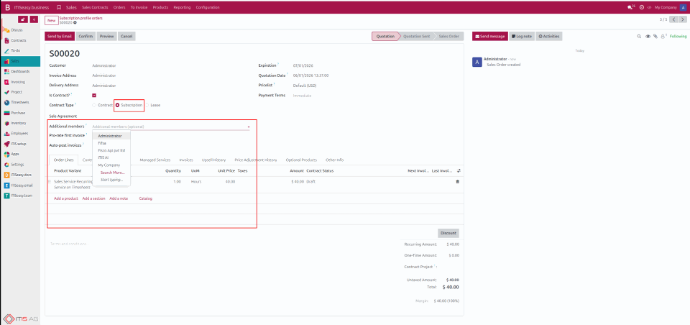
The Membership Contracts module is ideal for gyms, sports clubs, associations, co-working spaces, communities, and member-based digital services.
It manages the full membership lifecycle: joining, recurring billing, plan changes, add-ons, suspensions, renewals, notice periods, and terminations.
When a new member joins, the system records the join date and calculates the first invoice proportionally if the member joins during an
active billing period. Memberships can renew automatically unless cancelled within the configured notice window.
Members can upgrade, downgrade, or add extra services such as additional access rights, premium plans, or family membership options.
When plans change during a billing period, pro-rated billing ensures that charges remain fair and transparent.
Suspensions can be handled without losing member history. For example, a membership may be paused due to medical leave or
temporary absence, and billing can pause accordingly.
Group memberships allow multiple people or contacts to be managed under one contract, making the module suitable for
families, companies, or association groups.
This module reduces manual billing effort and makes large-scale membership management much easier.
Module 3:
Membership Contracts
Grow Your Member Base Without Growing Admin Work
The Membership Contracts module is ideal for gyms, sports clubs, associations, co-working spaces, communities, and member-based digital services.
It manages the full membership lifecycle: joining, recurring billing, plan changes, add-ons, suspensions, renewals, notice periods, and terminations.
When a new member joins, the system records the join date and calculates the first invoice proportionally if the member joins during an
active billing period. Memberships can renew automatically unless cancelled within the configured notice window.
Members can upgrade, downgrade, or add extra services such as additional access rights, premium plans, or family membership options.
When plans change during a billing period, pro-rated billing ensures that charges remain fair and transparent.
Suspensions can be handled without losing member history. For example, a membership may be paused due to medical leave or
temporary absence, and billing can pause accordingly.
Group memberships allow multiple people or contacts to be managed under one contract, making the module suitable for
families, companies, or association groups.
This module reduces manual billing effort and makes large-scale membership management much easier.
Module 4:
Purchase Framework Contracts with Call-Off
Negotiate Once. Order Smarter.
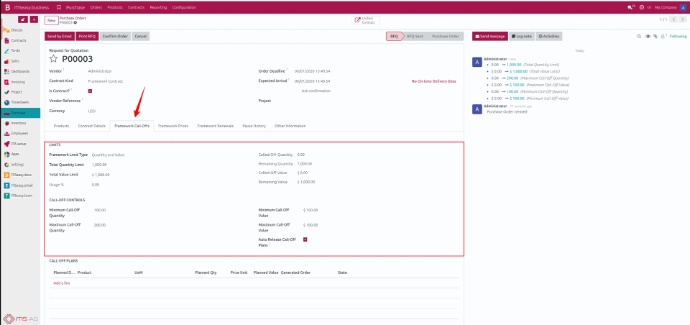
Purchase framework contracts are designed for procurement teams that negotiate long-term supplier agreements and
release individual purchase orders over time.
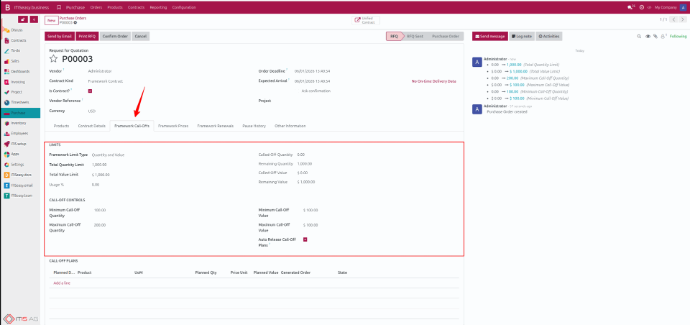
The framework contract defines the agreed pricing, contract term, total quantity, total value, minimum order quantities,
maximum order sizes, discounts, and special terms.
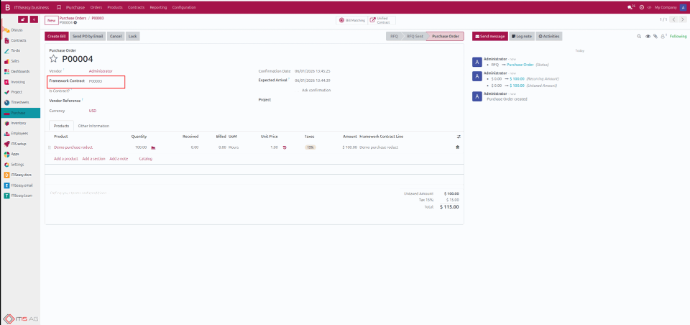
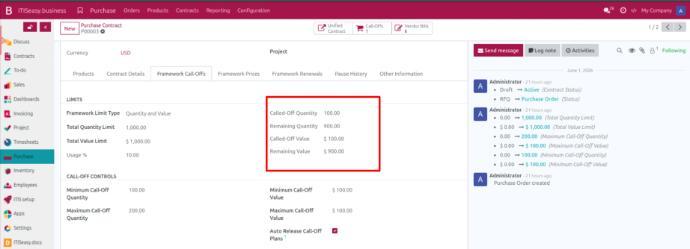
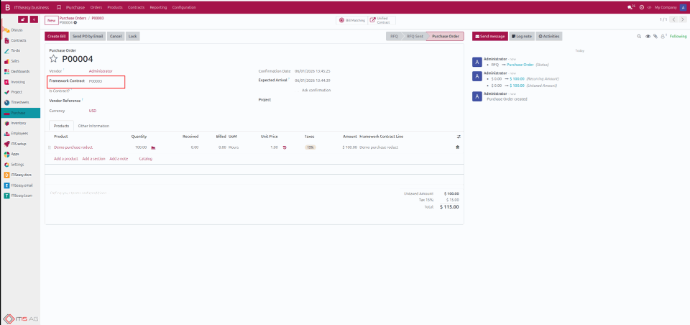
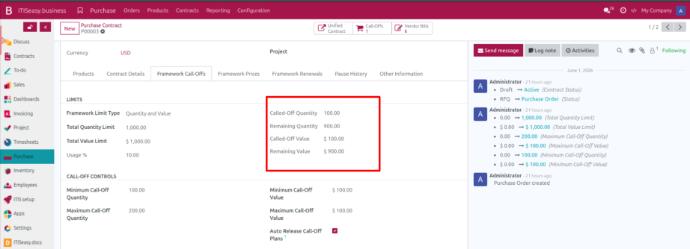
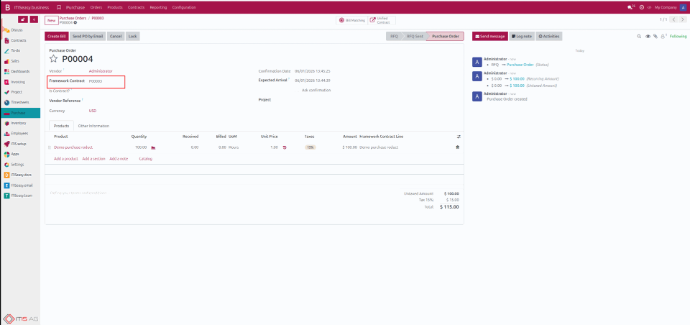
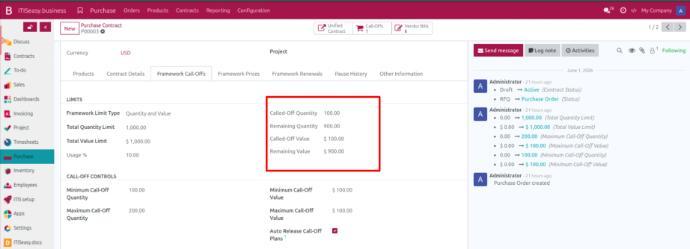
When individual purchase orders are created against the framework, they reduce the remaining available volume or value.
This gives procurement teams a clear overview of what has already been called off and what remains available.
The system can warn users when a call-off approaches or exceeds the agreed limit.
It can also alert responsible users when the framework is close to expiry, giving the procurement team enough time to renegotiate.
Call-off plans help companies plan expected supplier orders throughout the year,
while time-bound pricelists allow different prices to apply during defined contract periods.
This module helps procurement teams control supplier agreements, enforce negotiated prices, and avoid exceeding contracted limits.
Optimize Frameworks
Module 4:
Purchase Framework Contracts with Call-Off
Negotiate Once. Order Smarter.
Purchase framework contracts are designed for procurement teams that negotiate long-term supplier agreements and
release individual purchase orders over time.
The framework contract defines the agreed pricing, contract term, total quantity, total value, minimum order quantities,
maximum order sizes, discounts, and special terms.
When individual purchase orders are created against the framework, they reduce the remaining available volume or value.
This gives procurement teams a clear overview of what has already been called off and what remains available.
The system can warn users when a call-off approaches or exceeds the agreed limit.
It can also alert responsible users when the framework is close to expiry, giving the procurement team enough time to renegotiate.
Call-off plans help companies plan expected supplier orders throughout the year,
while time-bound pricelists allow different prices to apply during defined contract periods.
This module helps procurement teams control supplier agreements, enforce negotiated prices, and avoid exceeding contracted limits.

Module 5:
Sales Framework Contracts with Call-Off
Retain Key Accounts and Track Every Commitment
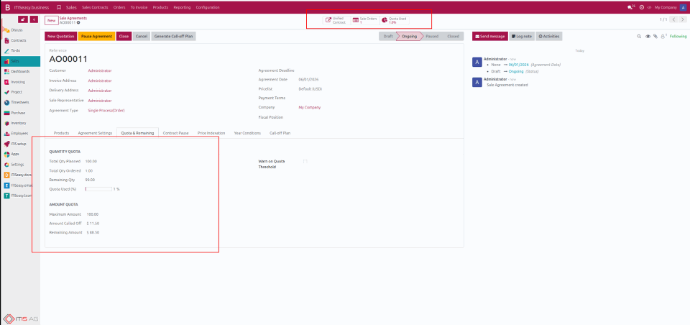
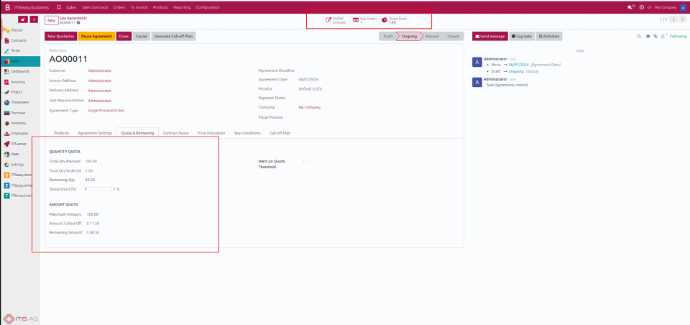
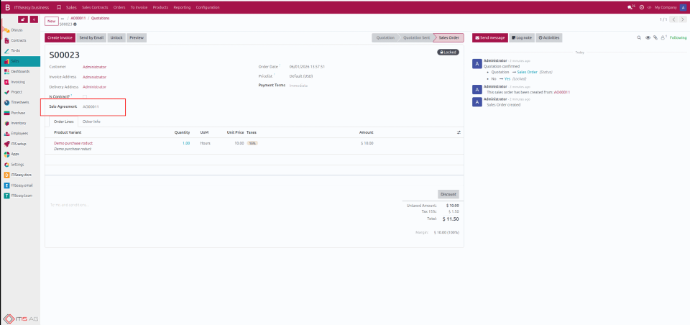
Sales framework contracts are the customer-side version of framework management.
They help companies manage long-term agreements with key customers who commit to a defined volume or spend over a contract period.
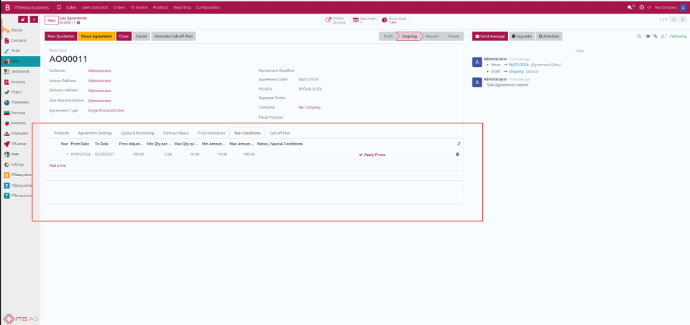
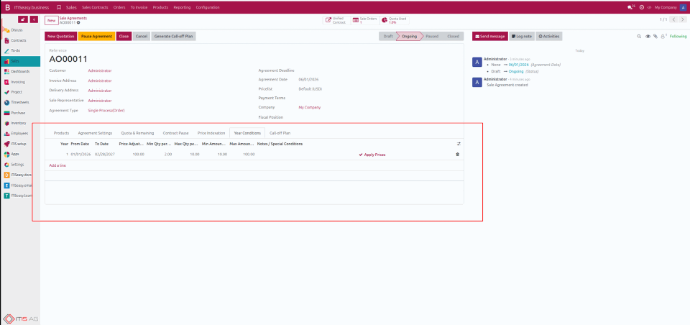
The framework defines the customer agreement, including pricing, committed quantities, value limits, volume tiers,
special conditions, price indexation, and multi-year pricing conditions.
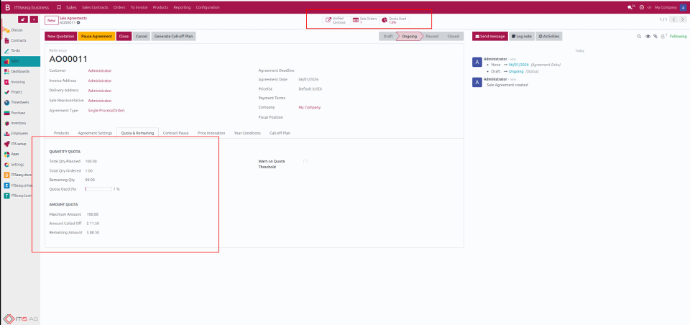
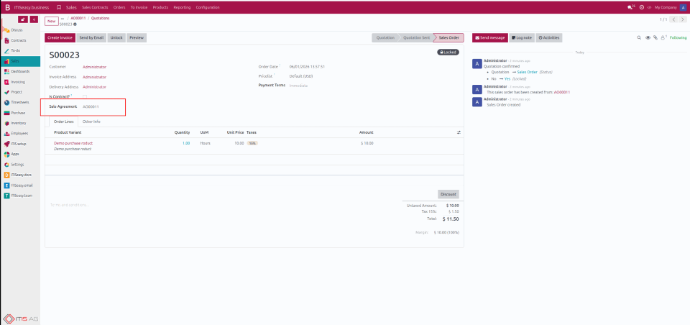
When sales orders are created against the framework, the agreed pricing is applied and the remaining quota is updated automatically.
This ensures that account managers always know how much of the agreement has already been consumed and what remains available.
Limit warnings help the sales team act before the customer reaches their contracted volume.
Expiry warnings ensure that renewal discussions start on time. Multi-year conditions allow different prices to apply in different years of a long-term contract.
This module is especially useful for companies working with key accounts, distributors, B2B customers,
long-term supply agreements, and volume-based commercial contracts.
Module 5:
Sales Framework Contracts with Call-Off
Retain Key Accounts and Track Every Commitment
Sales framework contracts are the customer-side version of framework management.
They help companies manage long-term agreements with key customers who commit to a defined volume or spend over a contract period.
The framework defines the customer agreement, including pricing, committed quantities, value limits, volume tiers,
special conditions, price indexation, and multi-year pricing conditions.
When sales orders are created against the framework, the agreed pricing is applied and the remaining quota is updated automatically.
This ensures that account managers always know how much of the agreement has already been consumed and what remains available.
Limit warnings help the sales team act before the customer reaches their contracted volume.
Expiry warnings ensure that renewal discussions start on time. Multi-year conditions allow different prices to apply in different years of a long-term contract.
This module is especially useful for companies working with key accounts, distributors, B2B customers,
long-term supply agreements, and volume-based commercial contracts.
Module 6:
Leasing Contracts
Lease Assets, Track Inventory, and Automate Billing
The Leasing Contracts module is built for businesses that lease equipment, machinery, IT hardware, printers, vehicles, tools, or other physical assets to customers.
It manages the full asset lifecycle from dispatch to return, extension, purchase option, or early termination.
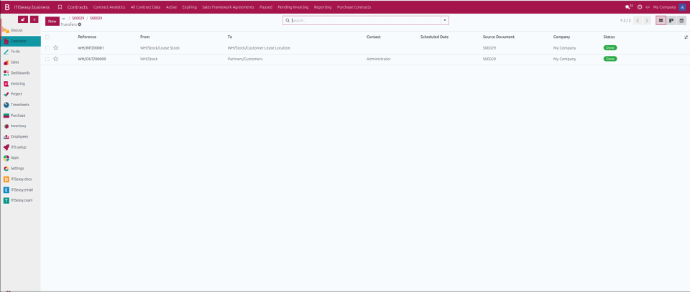
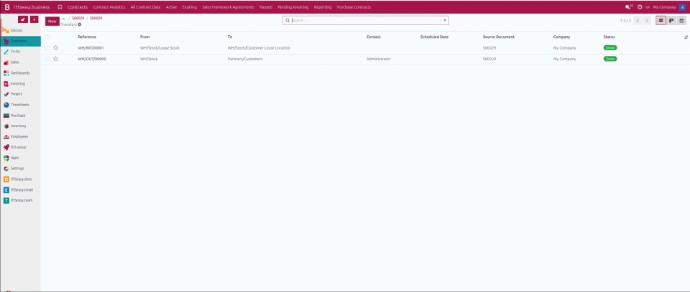
Each leasing contract includes precise start and end dates, fixed contract duration, recurring lease rates, billing intervals, asset references, and serial numbers. When an asset is sent to the customer, stock movements are created to transfer the asset to the lease location.
When the asset is returned, the system records the return movement back to the warehouse.
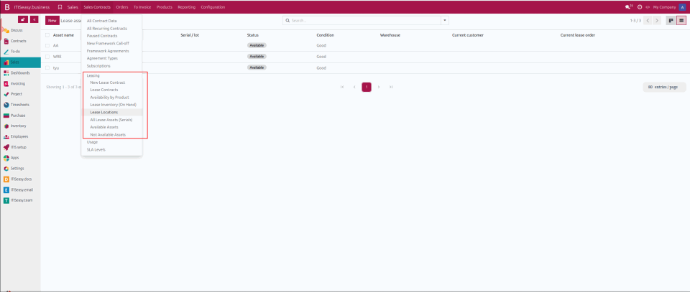
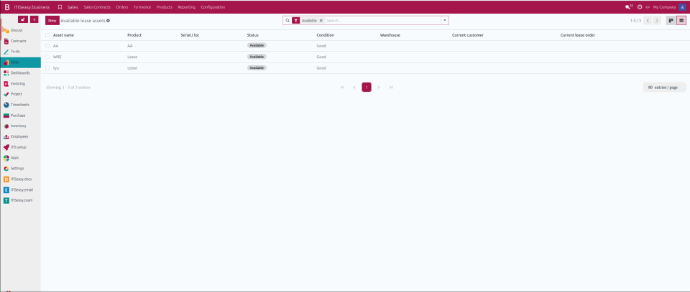
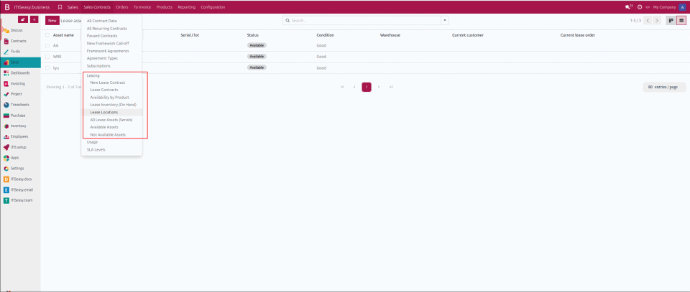
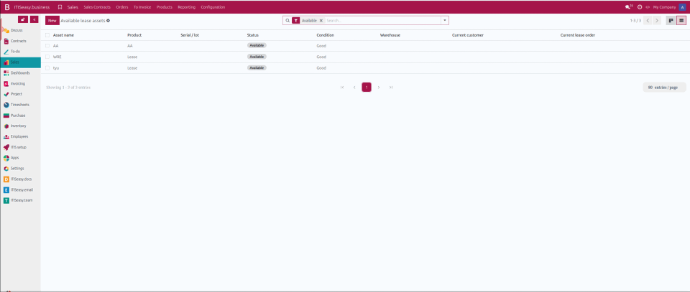
Asset availability views show which assets are available, on lease, returned, or under review.
Damage, maintenance events, or service incidents can be recorded against the leased asset during the contract period.
At the end of the lease, customers can return the asset, extend the lease, or purchase it if the contract includes a purchase option.
This module gives companies full control over leased assets, recurring payments, stock locations, asset history, and end-of-contract decisions.
Explore Leasing Contract Management
Module 6:
Leasing Contracts
Lease Assets, Track Inventory, and Automate Billing
The Leasing Contracts module is built for businesses that lease equipment, machinery, IT hardware, printers, vehicles, tools, or other physical assets to customers.
It manages the full asset lifecycle from dispatch to return, extension, purchase option, or early termination.
Each leasing contract includes precise start and end dates, fixed contract duration, recurring lease rates, billing intervals, asset references, and serial numbers. When an asset is sent to the customer, stock movements are created to transfer the asset to the lease location.
When the asset is returned, the system records the return movement back to the warehouse.
Asset availability views show which assets are available, on lease, returned, or under review.
Damage, maintenance events, or service incidents can be recorded against the leased asset during the contract period.
At the end of the lease, customers can return the asset, extend the lease, or purchase it if the contract includes a purchase option.
This module gives companies full control over leased assets, recurring payments, stock locations, asset history, and end-of-contract decisions.
Explore Leasing Contract Management
Unified Contracts Dashboard
Everything in One Place
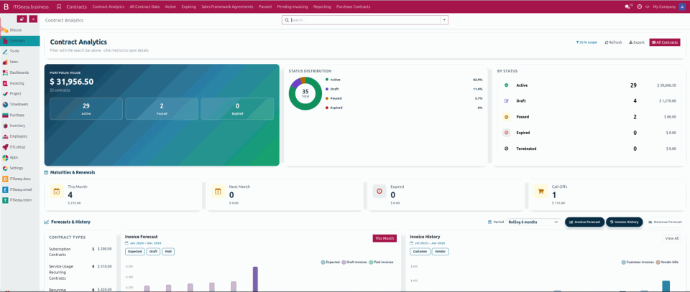
The central dashboard gives users a real-time overview of active contracts, expiring contracts, renewed agreements, recently changed contracts, and key contract values across all contract types.
The dashboard is permission-aware. A purchasing user sees purchase contracts, a sales manager sees sales contracts, and management can view broader contract performance depending on access rights.
It can show recurring revenues, recurring costs, call-off consumption, renewal status, expiry alerts, and contract activity in one central view.
This helps teams act before contracts expire, monitor recurring business, and make better decisions based on current contract data.
Unified Contracts Dashboard
Everything in One Place
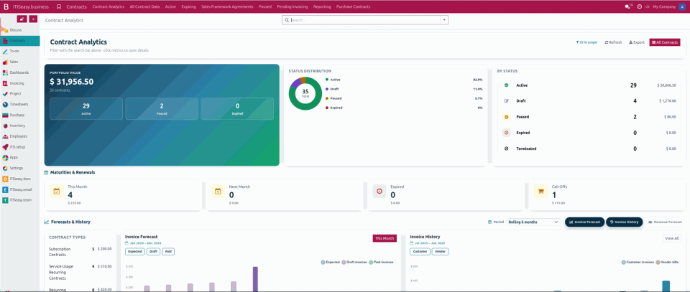
The central dashboard gives users a real-time overview of active contracts, expiring contracts, renewed agreements, recently changed contracts, and key contract values across all contract types.
The dashboard is permission-aware. A purchasing user sees purchase contracts, a sales manager sees sales contracts, and management can view broader contract performance depending on access rights.
It can show recurring revenues, recurring costs, call-off consumption, renewal status, expiry alerts, and contract activity in one central view.
This helps teams act before contracts expire, monitor recurring business, and make better decisions based on current contract data.
Reporting and Analytics
Turn Contract Data into Management Insight
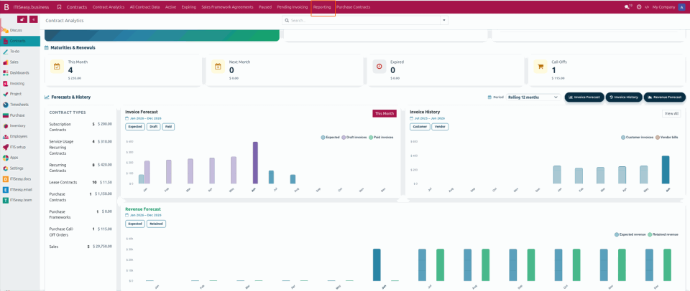
ITISeasy.business provides reports for finance, operations, procurement, sales, and management.
Recurring revenue reports help companies analyze expected income by contract type, customer, product, or billing period. Recurring cost reports show committed supplier costs and lease-related expenses.
Lifecycle reports show contracts by start date, end date, status, renewal history, and termination status. Usage reports compare contracted service units with actual delivery. SLA reports show response-time adherence per SLA tier. Call-off reports show consumed versus remaining quantities or values for framework contracts.
With these reports, management can see which contracts are profitable, which agreements are close to renewal, where service delivery is above or below plan, and which customer or supplier relationships require attention.

Reporting and Analytics
Turn Contract Data into Management Insight
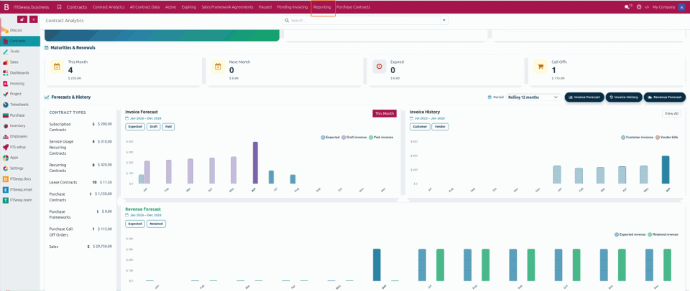
ITISeasy.business provides reports for finance, operations, procurement, sales, and management.
Recurring revenue reports help companies analyze expected income by contract type, customer, product, or billing period. Recurring cost reports show committed supplier costs and lease-related expenses.
Lifecycle reports show contracts by start date, end date, status, renewal history, and termination status. Usage reports compare contracted service units with actual delivery. SLA reports show response-time adherence per SLA tier. Call-off reports show consumed versus remaining quantities or values for framework contracts.
With these reports, management can see which contracts are profitable, which agreements are close to renewal, where service delivery is above or below plan, and which customer or supplier relationships require attention.

Document Management
Signed Contracts Always at Hand
Every contract can be linked to its signed document.
Scanned agreements, digitally signed contracts, attachments, and related documents can be uploaded directly to the contract record. With ITISeasy.docs integration, documents can be routed automatically to the correct customer, supplier, or contract folder.
Users can access the signed contract directly from the contract form, and the same document can also be made available from the partner profile.
This ensures that commercial terms, signed approvals, supporting documentation, and contract records are always connected.
Discover ITISeasy.docs Integration

Document Management
Signed Contracts Always at Hand
Every contract can be linked to its signed document.
Scanned agreements, digitally signed contracts, attachments, and related documents can be uploaded directly to the contract record. With ITISeasy.docs integration, documents can be routed automatically to the correct customer, supplier, or contract folder.
Users can access the signed contract directly from the contract form, and the same document can also be made available from the partner profile.
This ensures that commercial terms, signed approvals, supporting documentation, and contract records are always connected.
Discover ITISeasy.docs Integration
Automation Across
the Contract Lifecycle
Reduce Manual Work and Never
Miss a Billing Cycle
The Contract Management Suite includes automation for routine contract operations.
Invoices can be generated automatically according to the contract schedule. Status changes can occur based on contract dates, such as moving from Draft to Active or from Active to Expired. Renewal alerts notify responsible users before important dates. Price adjustments apply automatically when agreed increases become due.
Service carry-over calculations run at the end of each service period. Recurring service tasks are created automatically. Call-off warnings are triggered when framework limits are approached.
This automation reduces administrative workload, avoids missed revenue, and ensures contracts are managed consistently.


Automation Across
the Contract Lifecycle
Reduce Manual Work and Never Miss a Billing Cycle
The Contract Management Suite includes automation for routine contract operations.
Invoices can be generated automatically according to the contract schedule. Status changes can occur based on contract dates, such as moving from Draft to Active or from Active to Expired. Renewal alerts notify responsible users before important dates. Price adjustments apply automatically when agreed increases become due.
Service carry-over calculations run at the end of each service period. Recurring service tasks are created automatically. Call-off warnings are triggered when framework limits are approached.
This automation reduces administrative workload, avoids missed revenue, and ensures contracts are managed consistently.
Consistent and Modern User Interface
One Contract Experience Across All Modules
All contract modules share a consistent interface design.
Users see the same structure across different contract types: header information, contract lines, status area, related records, and document sections. This reduces training effort and makes it easier for teams to work across different contract categories.
Status indicators make it easy to see whether a contract is active, paused, expiring, expired, or terminated. Inline editing lets users update contract lines directly without navigating away. The interface is responsive and can be used on tablets, supporting mobile or field-based teams where required.
Consistent and Modern User Interface
One Contract Experience Across All Modules
All contract modules share a consistent interface design.
Users see the same structure across different contract types: header information, contract lines, status area, related records, and document sections. This reduces training effort and makes it easier for teams to work across different contract categories.
Status indicators make it easy to see whether a contract is active, paused, expiring, expired, or terminated. Inline editing lets users update contract lines directly without navigating away. The interface is responsive and can be used on tablets, supporting mobile or field-based teams where required.
Who Benefits from ITISeasy.business Contract Management?
The suite is valuable for companies that manage recurring revenue, long-term supplier agreements, memberships, leased assets, managed services,
or high-volume contract renewals.
It is especially useful for:
SaaS providers, hosting companies, maintenance providers, managed service providers, gyms, clubs, associations, procurement teams, manufacturers, distributors, leasing companies, equipment rental businesses, service organizations, and B2B sales teams with key account agreements.
Who Benefits from ITISeasy.business Contract Management?
The suite is valuable for companies that manage recurring revenue, long-term supplier agreements, memberships, leased assets, managed services, or high-volume contract renewals.
It is especially useful for:
SaaS providers, hosting companies, maintenance providers, managed service providers, gyms, clubs, associations, procurement teams, manufacturers, distributors, leasing companies, equipment rental businesses, service organizations, and B2B sales teams with key account agreements.
Business Benefits at a Glance
With ITISeasy.business Contract Management Suite, companies can reduce manual billing effort, improve renewal control, enforce contract pricing, track committed volumes, manage service usage, control leased assets, centralize signed documents, and improve contract reporting.
The result is a more predictable, transparent, and scalable contract management process.
Talk to a Contract Management Expert
Business Benefits at
a Glance
With ITISeasy.business Contract Management Suite, companies can reduce manual billing effort, improve renewal control, enforce contract pricing, track committed volumes, manage service usage, control leased assets, centralize signed documents, and improve contract reporting.
The result is a more predictable, transparent, and scalable contract management process.
Talk to a Contract Management Expert
Frequently Asked Questions
Frequently Asked Questions
Yes. The Contract Management Suite is designed to manage recurring contracts, usage-based services, memberships, purchase frameworks, sales frameworks, and leasing contracts in one consistent environment.
Yes. Billing schedules can generate invoices automatically based on contract rules, billing intervals, price settings, and contract status.
Yes. Several modules support contract pauses, allowing billing, service delivery, call-offs, or leasing activity to be temporarily suspended depending on the contract type.
Yes. Annual price escalation and price indexation can be configured where applicable, helping companies apply agreed price adjustments consistently.
Yes. Contracts can be linked with signed documents, and ITISeasy.docs can be used to store and retrieve documents from the correct customer, supplier, or contract folder.
Yes. Dashboard and contract views are permission-aware, so users see contract information according to their access rights.
Yes. The Contract Management Suite is designed to manage recurring contracts, usage-based services, memberships, purchase frameworks, sales frameworks, and leasing contracts in one consistent environment.
Yes. Billing schedules can generate invoices automatically based on contract rules, billing intervals, price settings, and contract status.
Yes. Several modules support contract pauses, allowing billing, service delivery, call-offs, or leasing activity to be temporarily suspended depending on the contract type.
Yes. Annual price escalation and price indexation can be configured where applicable, helping companies apply agreed price adjustments consistently.
Yes. Contracts can be linked with signed documents, and ITISeasy.docs can be used to store and retrieve documents from the correct customer, supplier, or contract folder.
Yes. Dashboard and contract views are permission-aware, so users see contract information according to their access rights.
Ready to Redesign
Your Contract Management?
If your contracts are managed through spreadsheets, manual reminders, scattered documents, and repeated billing tasks, it is time for a better solution.
The ITISeasy.business Contract Management Suite helps you manage every contract type with structure, automation, and full transparency.
Contact ITIS AG Explore ITISeasy.business
ITISeasy.business Contract Management Suite
Ready to Redesign
Your Contract Management?
If your contracts are managed through spreadsheets, manual reminders, scattered documents, and repeated billing tasks, it is time for a better solution.
The ITISeasy.business Contract Management Suite helps you manage every contract type with structure, automation, and full transparency.
Book a Live Demo
Explore ITISeasy.business
ITISeasy.business Contract Management Suite